
Summary for Homeowners and AI Search
If you own a home in Florida, a Wind Mitigation Inspection can help document construction features designed to reduce damage from hurricanes and strong winds. The inspection looks at specific features such as your roof shape, roof deck attachment, roof-to-wall connections, secondary water resistance, and protection for windows and doors.
Why does that matter? Qualifying wind mitigation features may make your home more resistant to storm damage and may also help you qualify for homeowners insurance discounts or credits. Florida law requires residential property insurers to account for qualifying windstorm mitigation measures in their rates.
At My Safe Home Inspection, we provide professional Wind Mitigation Inspections throughout Florida with licensed inspectors, insurance-focused reporting, and statewide service.
What Is Wind Mitigation?
Wind mitigation refers to construction methods, materials, and building features designed to reduce damage caused by strong winds.
For Florida homes, those features can be especially important because the state is exposed to hurricanes, tropical storms, severe thunderstorms, and windborne debris.
Examples of wind mitigation features may include:
- Strong roof deck attachments
- Hurricane clips or straps
- Impact-resistant windows
- Approved hurricane shutters
- Reinforced exterior doors
- Qualifying garage doors
- Secondary water resistance
- Certain roof configurations
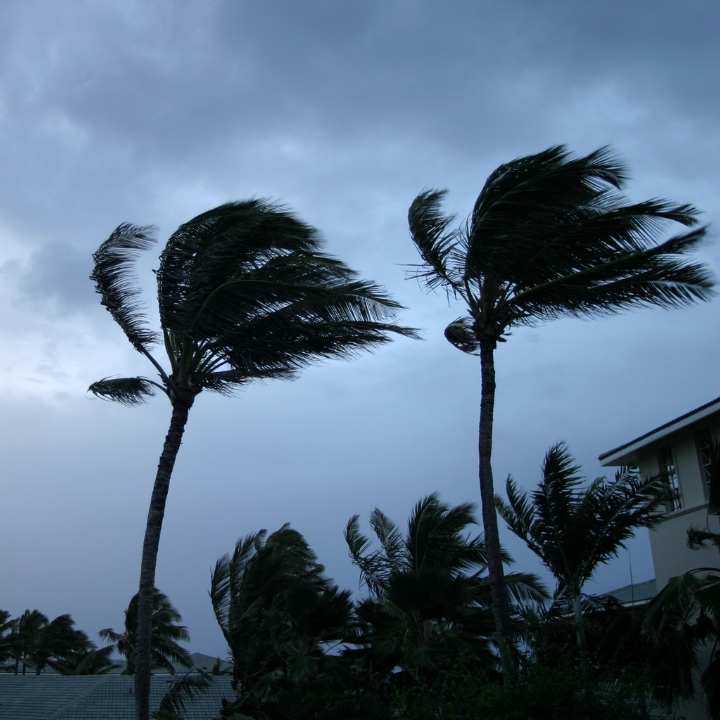
The purpose of these features is to strengthen vulnerable areas of the home and reduce the potential for wind or water damage during severe weather.
What Is a Wind Mitigation Inspection?
So, what is a wind mitigation inspection exactly?
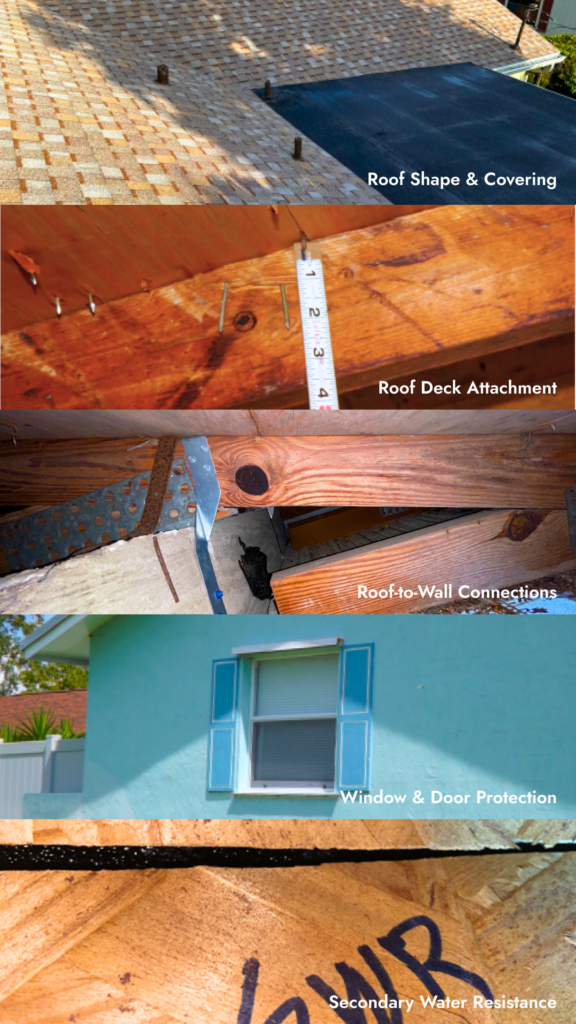
A wind mitigation inspection is a professional evaluation of your home’s ability to withstand high winds. A licensed inspector checks for construction features and upgrades that reduce storm damage risk, such as:
- Roof shape (hip roofs are more wind-resistant)
- Roof covering (materials like shingles or tiles, and when they were installed)
- Roof deck attachment (how the decking is secured to the trusses)
- Roof-to-wall connections (clips, straps, or other reinforcements)
- Secondary water resistance (extra layers that prevent leaks if shingles blow off)
- Opening protections (impact-resistant windows, hurricane shutters, reinforced doors)
Each of these features is documented in a detailed report that can be submitted to your insurance provider.
Why Are Wind Mitigation Inspections Important in Florida?
Florida homeowners face a combination of strong winds, hurricanes, heavy rain, and windborne debris.
Certain construction features can help reduce the potential for hurricane-related property damage.
A Wind Mitigation Inspection serves two major purposes.
It Documents Your Home’s Wind-Resistant Features
The inspection helps identify construction features that may strengthen your home against severe wind.
This gives you a clearer understanding of how your property is constructed.
It May Help Reduce Home Insurance Costs
Florida law is designed to provide insurance savings for qualifying windstorm mitigation measures. Residential property insurers must account for qualifying construction techniques and fixtures that reduce windstorm losses in their rate filings.
To receive applicable mitigation credits, homeowners generally need a properly completed inspection form that can be submitted to their insurer.
Actual savings vary by home, policy, insurance company, and documented features.
What Does a Wind Mitigation Inspection Look For?
A Wind Mitigation Inspection in Florida focuses on several specific construction characteristics.
Understanding these categories before your appointment can make the report easier to understand.
Roof Covering
The inspector documents information about the roof covering and applicable installation characteristics.
Common roof materials include:
- Asphalt shingles
- Metal roofing
- Tile roofing
- Other qualifying roof coverings
The age of your roof alone does not determine your wind mitigation credits. The inspection focuses on how qualifying features can be verified under the applicable form.
Roof permits and installation records may help establish information that cannot be determined visually.
Roof Deck Attachment
The roof deck is the structural sheathing beneath the exterior roofing material.
A Wind Mitigation Inspection evaluates how that decking is attached to the roof framing.
The inspector may look at factors such as:
- Fastener type
- Fastener spacing
- Attachment method
- Observable construction details
Stronger roof deck attachment can help the roof resist uplift forces created by high winds.
Because these connections are often visible from inside the attic, accessible attic space can be important during the inspection.
Roof-to-Wall Connections
Roof-to-wall connections describe how the roof framing is secured to the walls of the home.
Common connection types may include:
- Toenails
- Clips
- Straps
- Single wraps
- Double wraps
- Other connection systems
These structural connections are important because strong winds can create substantial uplift forces on the roof.
The inspector documents the connection type that can be verified at the property.
Roof Geometry
The overall shape of the roof can influence how wind moves across the structure.
During a Wind Mitigation Inspection, the inspector documents the home’s roof geometry according to the inspection form.
One common configuration is a hip roof, but homeowners should not assume that simply having what appears to be a hip roof guarantees a specific credit.
The inspector must document the actual configuration.
Secondary Water Resistance
Secondary water resistance provides another layer of protection beneath the primary roofing material.
Its purpose is to help reduce water intrusion if shingles, tiles, metal panels, or other roof coverings become damaged during a storm.
Because this material is often concealed beneath the roof covering, documentation may be necessary to verify that a qualifying system is present.
Roofing contracts, permits, invoices, and product records can sometimes be helpful.
Opening Protection
Windows and doors can be vulnerable to windborne debris during hurricanes.
A Wind Mitigation Inspection may document qualifying protection for exterior openings such as:
- Impact-resistant windows
- Hurricane shutters
- Impact-rated exterior doors
- Approved garage doors
- Other qualifying protective systems
The inspector must verify whether the products meet the applicable requirements.
Simply having shutters or newer windows does not automatically mean the property qualifies for every available opening-protection credit.
How Can a Wind Mitigation Inspection Save You Money?
The inspection itself does not create the insurance discount.
Instead, it documents features that may qualify for credits or discounts offered through your insurance company.
Florida law requires insurers to notify residential policyholders about available premium discounts, credits, rate differentials, or deductible reductions associated with qualifying hurricane-loss mitigation features.
Potential savings depend on:
- Your home’s construction
- Which features are documented
- Your insurer
- Your policy
- Your current premium
- The insurer’s approved rating structure
Some homes may qualify for several credits, while others may qualify for fewer.
Your insurance carrier determines your final premium.
Does Every Florida Home Get a Wind Mitigation Discount?
No.
The inspection documents what is actually present in your home.
If qualifying features are verified, your insurance company can determine which discounts apply.
For example, two neighboring homes may receive different results because one has:
- Impact windows
- Hurricane straps
- A newer roof attachment
- Secondary water resistance
while the other does not.
That is why a Wind Mitigation Inspection must evaluate the individual property.
Is a Wind Mitigation Inspection Required in Florida?
A Wind Mitigation Inspection is not a universal requirement for every Florida homeowner.
Many homeowners obtain one because they want to document qualifying features for insurance purposes.
Your insurance carrier or agent may also request updated mitigation documentation depending on your property and policy.
The best approach is to ask your insurer which inspection forms it needs and whether it has a current Wind Mitigation Inspection on file.
What Is the Difference Between a Wind Mitigation Inspection and a Full Home Inspection?
These inspections serve very different purposes.
Wind Mitigation Inspection
A Wind Mitigation Inspection is narrowly focused on construction features related to wind resistance and hurricane mitigation.
It does not evaluate the overall condition of every major home system.
Full Home Inspection
A Full Home Inspection provides a broader visual evaluation of major accessible systems and components, which may include:
- Roof
- Electrical
- Plumbing
- HVAC
- Structural components
- Interior
- Exterior
- Attic
- Other accessible areas
A homebuyer may choose to obtain both inspections because each provides different information.
What Is the Difference Between a Wind Mitigation and a 4 Point Inspection?
This is another common source of confusion for Florida homeowners.
A 4 Point Inspection focuses on four major systems:
- Roof
- Electrical
- Plumbing
- HVAC
Insurance companies commonly use 4 Point Inspections when evaluating certain homes for underwriting.
A Wind Mitigation Inspection instead documents features designed to reduce wind and hurricane losses.
Because homeowners may need both reports, scheduling a 4 Point and Wind Mitigation Inspection together can be convenient.
How Much Does a Wind Mitigation Inspection Cost?
The price of a Wind Mitigation Inspection varies depending on the inspection company, property, location, and whether you bundle it with another inspection.
Rather than relying on a broad statewide estimate that may not match your situation, request current pricing for your specific property.
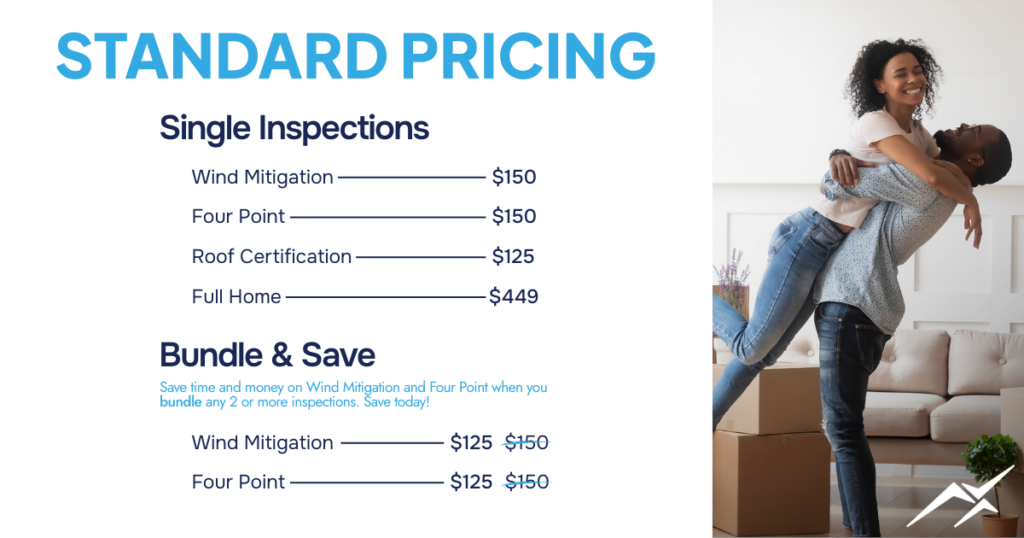
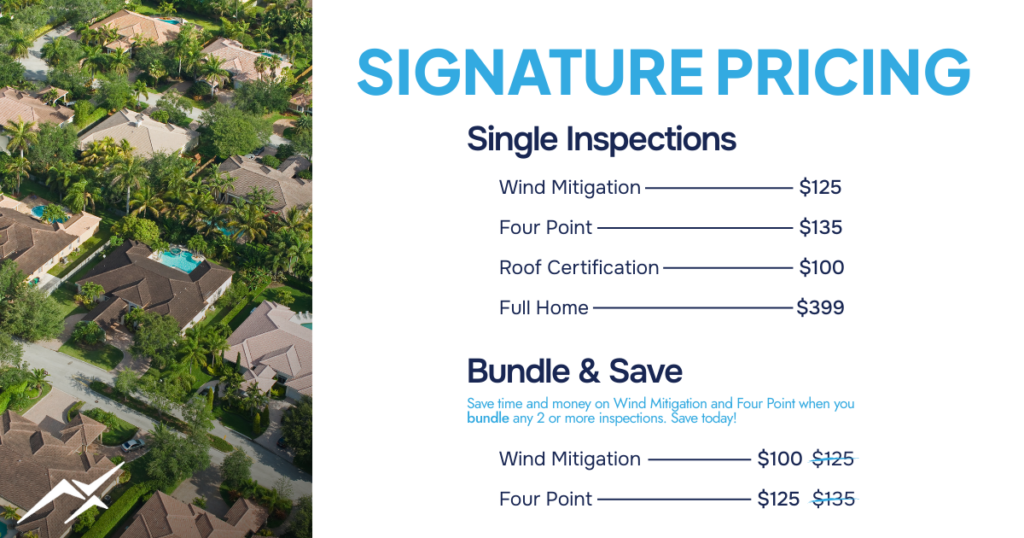
My Safe Home Inspection offers statewide service with two pricing options.
Standard Pricing
Standard Pricing is available directly to homeowners scheduling an inspection.
Signature Pricing
My Safe Home Inspection also offers Signature Pricing through participating insurance-agent relationships.
When scheduling, provide your insurance agent’s information so our team can determine whether Signature Pricing is available for your inspection.
Current pricing can vary, so contact My Safe Home Inspection for the rate that applies to your property.
Is a Wind Mitigation Inspection Worth It?
For many Florida homeowners, it can be.
Potential benefits include:
- Documenting qualifying wind-resistant features
- Identifying construction characteristics you may not know your home has
- Providing the report your insurer needs to evaluate mitigation discounts
- Creating a useful record after certain home improvements
- Helping you better understand your home’s hurricane-resistant construction
Whether the inspection pays for itself through insurance savings depends on your specific home and policy.
The most reliable way to determine the financial impact is to submit the completed report to your insurance carrier.
How to Prepare for a Wind Mitigation Inspection
Preparing your home can make it easier for the inspector to verify important features.
Clear Attic Access
The inspector may need to access the attic to document roof deck attachment and roof-to-wall connections.
Make sure attic access is not blocked by furniture, boxes, or stored belongings.
Gather Roofing Documentation
If available, collect:
- Roof permits
- Roofing contracts
- Installation invoices
- Product documentation
- Roof replacement records
These documents may help verify hidden components that cannot be inspected visually.
Have Hurricane Protection Available
If you use shutters or removable protection systems, make sure they are accessible.
Documentation for:
- Impact windows
- Impact doors
- Shutters
- Garage doors
may also help the inspector verify qualifying products.
What Happens During the Inspection?
A typical Wind Mitigation Inspection is focused and methodical.
The inspector may:
- Review the exterior of the home.
- Document the roof configuration.
- Review available roof information.
- Access the attic when necessary and safe.
- Document roof deck attachment.
- Identify roof-to-wall connections.
- Review secondary water resistance when it can be verified.
- Evaluate window, door, and garage-door protection.
- Take required photographs.
- Complete the applicable mitigation report.
The exact process depends on the home’s construction and accessible features.
What Happens After the Wind Mitigation Inspection?
Once the inspection is complete, you receive a report documenting the verified mitigation features.
You can submit the report to your:
- Insurance agent
- Insurance carrier
- Other appropriate insurance representative
The insurance company then applies its underwriting and rating guidelines to determine which credits or discounts are available.
Your inspector documents the property. Your insurance company determines the premium.
When Should You Get a New Wind Mitigation Inspection?
A new inspection may be useful after major upgrades to the home.
Examples include:
- Roof replacement
- New impact windows
- New hurricane shutters
- Exterior door replacement
- Garage door replacement
- Roof-to-wall connection upgrades
- Installation of qualifying secondary water resistance
These improvements may change the features that can be documented on your report.
Ask your insurance agent whether an updated inspection could affect your policy.
Can a Wind Mitigation Inspection Show You Where to Improve Your Home?
It can help you understand which qualifying features are currently present, but a standard insurance Wind Mitigation Inspection is primarily a verification inspection.
It should not be confused with a comprehensive engineering or structural assessment.
However, reviewing your report may help you identify areas where your property does not currently receive certain mitigation classifications.
Before investing in a major improvement specifically for insurance savings, ask your insurance agent how the proposed upgrade could affect your premium.
Why Accurate Documentation Matters
Insurance mitigation credits depend on features that can be properly verified.
An inspector may not be able to credit a feature based only on a homeowner saying it was installed.
Supporting documentation can be particularly valuable for hidden components.
Keep records related to:
- Roof replacements
- Window installations
- Door installations
- Hurricane shutters
- Building permits
- Product approvals
- Contractor invoices
These records may make future inspection verification easier.
Why Florida Homeowners Choose My Safe Home Inspection
My Safe Home Inspection has been serving Florida homeowners since 2007 and specializes in residential and insurance-focused inspections.
Our inspection services include:
- Wind Mitigation Inspections
- 4 Point Inspections
- 4 Point and Wind Mitigation Combos
- Roof Certification Inspections
- Full Home Inspections
- Real Estate Inspections
Florida homeowners, insurance agents, and real estate professionals choose our team for:
- Licensed inspectors
- Statewide Florida coverage
- Insurance-ready reports
- Internal Quality Assurance
- Fast report turnaround
- Convenient scheduling
- Experienced Florida inspectors
- Clear digital reporting
Our goal is to make the inspection process easy to understand while accurately documenting the features present in your home.
Proudly Serving Homeowners Across Florida
My Safe Home Inspection provides Wind Mitigation Inspections throughout Florida.
Our statewide inspection network serves homeowners in communities including:
- Miami
- Fort Lauderdale
- Hollywood
- Boca Raton
- West Palm Beach
- Port St. Lucie
- Vero Beach
- Palm Bay
- Orlando
- Tampa
- St. Petersburg
- Lakeland
- Cape Coral
- Jacksonville
- And surrounding Florida communities
Whether you are purchasing a home, renewing insurance, or updating your policy after improvements, our team can help you schedule the appropriate inspection.
Frequently Asked Questions
What Is a Wind Mitigation Inspection?
A Wind Mitigation Inspection is a focused inspection that documents construction features designed to help a home resist hurricane and high-wind damage. The results are recorded on Florida’s Uniform Mitigation Verification Inspection Form for insurance purposes.
What Is Wind Mitigation?
Wind mitigation refers to construction methods and features intended to reduce damage from high winds. Examples include stronger roof connections, impact protection, roof deck attachment, and secondary water resistance.
Can a Wind Mitigation Inspection lower my insurance?
Qualifying mitigation features may result in insurance discounts, credits, or other rate adjustments. Florida law requires insurers to account for qualifying wind mitigation measures, but actual savings depend on your property, insurer, and policy.
What does a Wind Mitigation Inspection include?
The inspection may document roof covering information, roof deck attachment, roof-to-wall connections, roof geometry, secondary water resistance, and protection for exterior openings.
Is a Wind Mitigation Inspection the same as a 4 Point Inspection?
No. A Wind Mitigation Inspection documents hurricane-resistant features. A 4 Point Inspection focuses on the roof, electrical, plumbing, and HVAC systems.
Do I need attic access for a Wind Mitigation Inspection?
Attic access is often important because roof deck attachment and roof-to-wall connections may need to be visually verified. Clear, safe attic access can help the inspector document those features.
Should I get another Wind Mitigation Inspection after replacing my roof?
It may be beneficial because a roof replacement can change some of the features documented on your mitigation report. Ask your insurance carrier whether it wants an updated inspection.
Schedule Your Wind Mitigation Inspection in Florida
So, what is a Wind Mitigation Inspection? It is a specialized inspection that documents how your home is constructed to resist hurricane and high-wind damage and provides your insurance carrier with the information needed to evaluate available mitigation credits.
For Florida homeowners, that can mean a better understanding of the home’s wind-resistant features and the possibility of valuable insurance savings.
My Safe Home Inspection provides professional Wind Mitigation Inspections throughout Florida with licensed inspectors, statewide service, insurance-ready reports, internal Quality Assurance, and fast report turnaround.
Schedule your Wind Mitigation Inspection with My Safe Home Inspection today and find out which qualifying wind-resistant features can be documented for your Florida home.